- Products
- Categories
- Histories



MASCOT® FOOTWEAR ELECTROSAFE
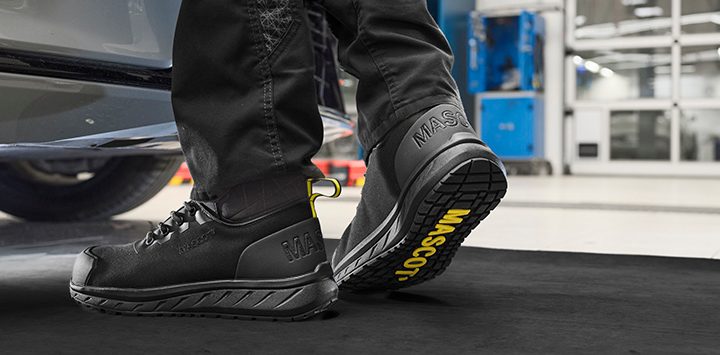
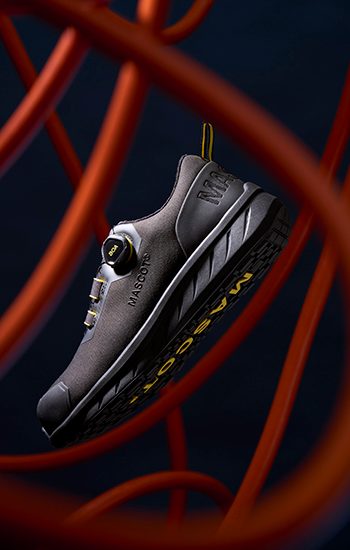
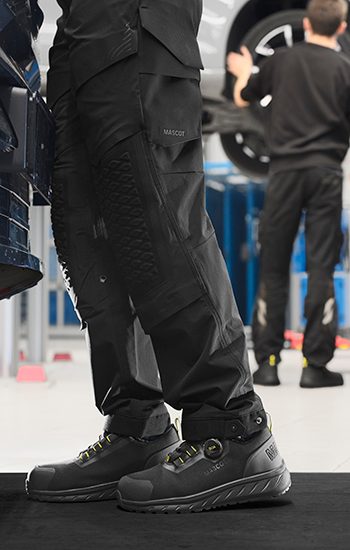
This range of electrically insulating safety footwear is developed for work with or near live installations, such as in the electric vehicle and energy sectors. The range offers a combination of advanced safety features, a comfortable fit, and durable materials, ensuring a high level of safety and comfort throughout the workday. You will find safety shoes, boots, and sandals, allowing you to select the footwear that best suits your workday.
A High Level of Safety With Electrically Insulating Outsoles
The safety shoes in MASCOT® FOOTWEAR ELECTROSAFE are developed with electrically insulating outsoles that serve as an effective barrier between the user and the ground. The high electrical resistance in the outsoles minimises the risk of electricity being conducted through the body, protecting you from electric shocks.
Simultaneously, comfort is prioritised. The shoes feature a shock-absorbing, lightweight, and flexible EVA midsole, providing optimal support and comfort—even on long workdays. Combined with the ultra-light and flexible MASCOLAYER® nail protection, you are both highly protected and receive excellent walking comfort.
Approved According to ASTM F2413-24 EH
The safety footwear is certified according to the American standard ASTM F2413-24 EH, ensuring maximum protection. The footwear is tested to withstand 18,000 volts in a dry and protected environment and also provides protection in open environments against up to 600 volts in dry conditions. Unlike many safety shoes from MASCOT, this footwear does not include ESD and anti-static properties. To achieve EH classification, the footwear must not be electrically conductive but must instead insulate you from the current. The safety footwear is also certified according to EN ISO 20345:2022 and has achieved the following certification: SB PS SR FO HRO WPA.
Important to Know About MASCOT® FOOTWEAR ELECTROSAFE
Supplementary Protection Against Electrical Hazards
The footwear protects against electrical hazards and acts as an additional layer of protection. However, it should not replace other safety measures or be used as the sole protection. For example, the use of insulating mats and gloves should still be implemented.
Maintenance of the Footwear
The protective properties of the footwear depend on it being dry and in good condition. If the shoes become wet, worn, or damaged, their insulating ability is impaired, and protection is reduced. In practical use, various factors such as water, oil or gasoline, gravel, or salt can weaken the shoes' insulating ability. We therefore recommend that you pay attention to wear and proper maintenance of the shoes.
- Mascot International A/S
- Silkeborgvej 14
DK-7442 Engesvang SE/CVR nr. 1386 3385 - Telephone: +64 027 290 4092